The Transform Pillar
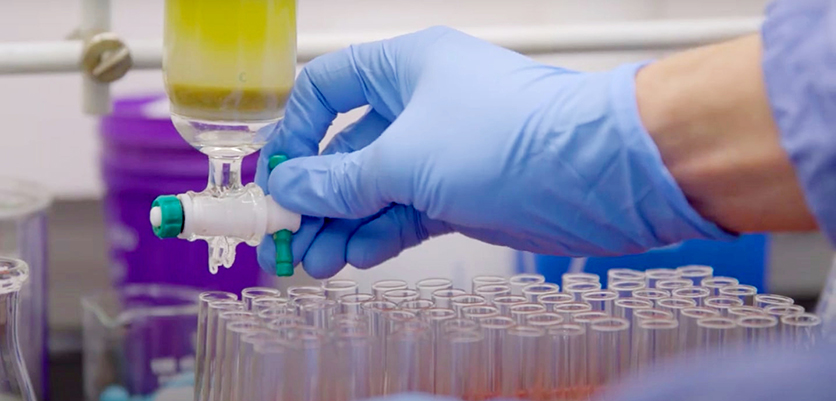
Creating essential fuels and chemicals from waste
The chemical and fuels industries rely heavily on fossil-based raw materials and often use energy-intensive, multistep manufacturing processes that generate substantial waste and greenhouse-gas emissions. The Transform Pillar aims to decarbonize and modernize these industries by developing more efficient ways to convert waste streams and renewable feedstocks into essential chemicals, materials, and transportation fuels. Its work combines expertise in chemistry, chemical and biological engineering, environmental engineering, and computational modeling to create a more circular chemical economy—one in which discarded materials and industrial byproducts become resources for new products.
Research priorities
The Transform Pillar’s principal research priorities include:
- Developing shorter, more efficient alternatives to conventional chemical-production pathways.
- Converting biomass, biorefinery waste, wastewater carbon, and end-of-life plastics into valuable chemicals and materials
- Integrating biological, enzymatic, electrochemical, thermochemical, and photocatalytic processes to capitalize on the strengths of each approach
- Producing high-volume “platform” chemicals and intermediates used in products such as nylon, carbon fiber, plastics, coatings, and fuels
- Improving the selectivity, efficiency, scalability, and integration of catalytic reactions—for example, by reducing unwanted byproducts or regenerating costly biological cofactors electrochemically.
- Developing computational models and fast, flexible simulation tools to design and optimize complex hybrid chemical systems.
- Applying AI, machine learning, automated experimentation, and advanced data resources to accelerate catalyst discovery and process optimization.
Representative projects include turning biorefinery waste into biodegradable polymers and acrylic acid; producing acrylonitrile for carbon fiber from biomass; converting discarded plastics into bioproducts; recovering nitrogen and phosphorus from waste; and developing cleaner electrochemical routes to chemicals used in nylon and other consumer materials.
Collectively, these efforts seek to replace linear, fossil-dependent manufacturing with adaptable systems that recover carbon and other resources from waste and return them to productive use.
Core faculty
- Linsey Seitz, PhD, Transform co-chair
- Ashty Karim, PhD, Transform co-chair
Get involved
Individuals and companies can support the development of resource-efficient manufacturing solutions by making a gift to the Trienens Institute. Industry professionals and other leaders can have a broader impact through the Trienens Institute Executive Council and Industry Affiliates Program.